
Tri-County Regional Planning Commission
Our Organization
The Tri‑County Regional Planning Commission (TCRPC) is a voluntary, multi‑county planning organization serving Peoria, Tazewell, and Woodford counties. Established under Illinois law, the Commission studies regional needs and help communities plan for the future. Regional planning commissions, sometimes called regional councils or councils of government, bring together local governments to address shared challenges that extend beyond city or county boundaries.
Tri-County Regional Planning commission serves as the “Steward of the Regional Vision” in Greater Peoria. TCRPC promotes intergovernmental cooperation, regional planning, and a vision for the future. We accomplish this by:
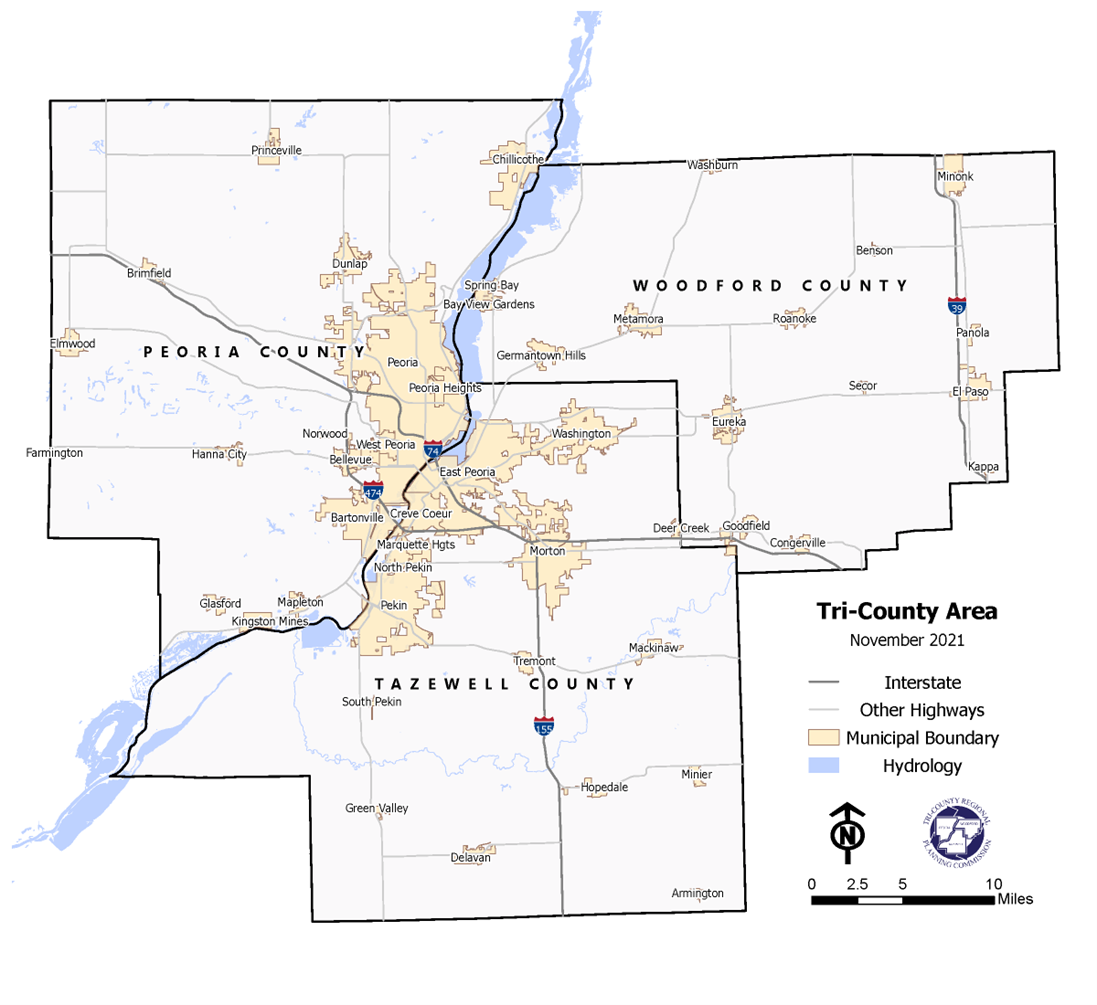
Tri-County provides regional planning services across four primary focus areas:
Transportation Planning
As the region’s MPO, TCRPC coordinates transportation planning, funding, and performance monitoring to support the regional transportation system.
Community Planning
TCRPC provides community ‑focused planning services that help communities plan, strengthen policies, secure funding, and build long‑term capacity through technical assistance and training.
Environmental Planning
TCRPC supports the protection of natural resources and preparation for environmental risks through regional coordination and data-driven planning.
GIS & Data Services
TCRPC provides regional geographic information systems (GIS) services and data tools that support planning, operations, and informed decision-making across the region.
Legislative Foundation
Regional planning commissions in Illinois are authorized by state law to help counties plan for coordinated development and shared regional needs.
1957: Illinois enacted legislation authorizing the creation of regional planning commissions.
1958: Peoria, Tazewell, and Woodford counties jointly established the Tri‑County Regional Planning Commission.
1976: TCRPC was designated as the Metropolitan Planning Organization (MPO) for the Peoria–Pekin Urbanized Area.
2021: TCRPC merged with the MPO Policy Committee, assuming all MPO roles and responsibilities.
Today, TCRPC continues to operate as a partnership-driven planning organization serving the tri-county region.
Tri-County serves the region in two related but distinct roles. While these roles overlap, they are created by different laws and serve different purposes.
As a Regional Planning Commission (RPC), TCRPC is authorized under Illinois law to support cooperative planning for Peoria, Tazewell, and Woodford counties. In this role, the Commission helps local governments study regional needs and develop plans related to land use, environmental resources, community development, and other issues that expand across county and municipal boundaries.
As a Metropolitan Planning Organization (MPO), TCRPC is designated under federal law to coordinate transportation planning and funding for the Peoria-Pekin Urbanized Area and surrounding 20-year planning area. This role exists to ensure that transportation decisions reflect how people actually travel across jurisdictions and that federal transportation funds are programmed through a regional, cooperative process.
TCRPC’s Dual Roles: RPC & MPO
MPO History & Merger
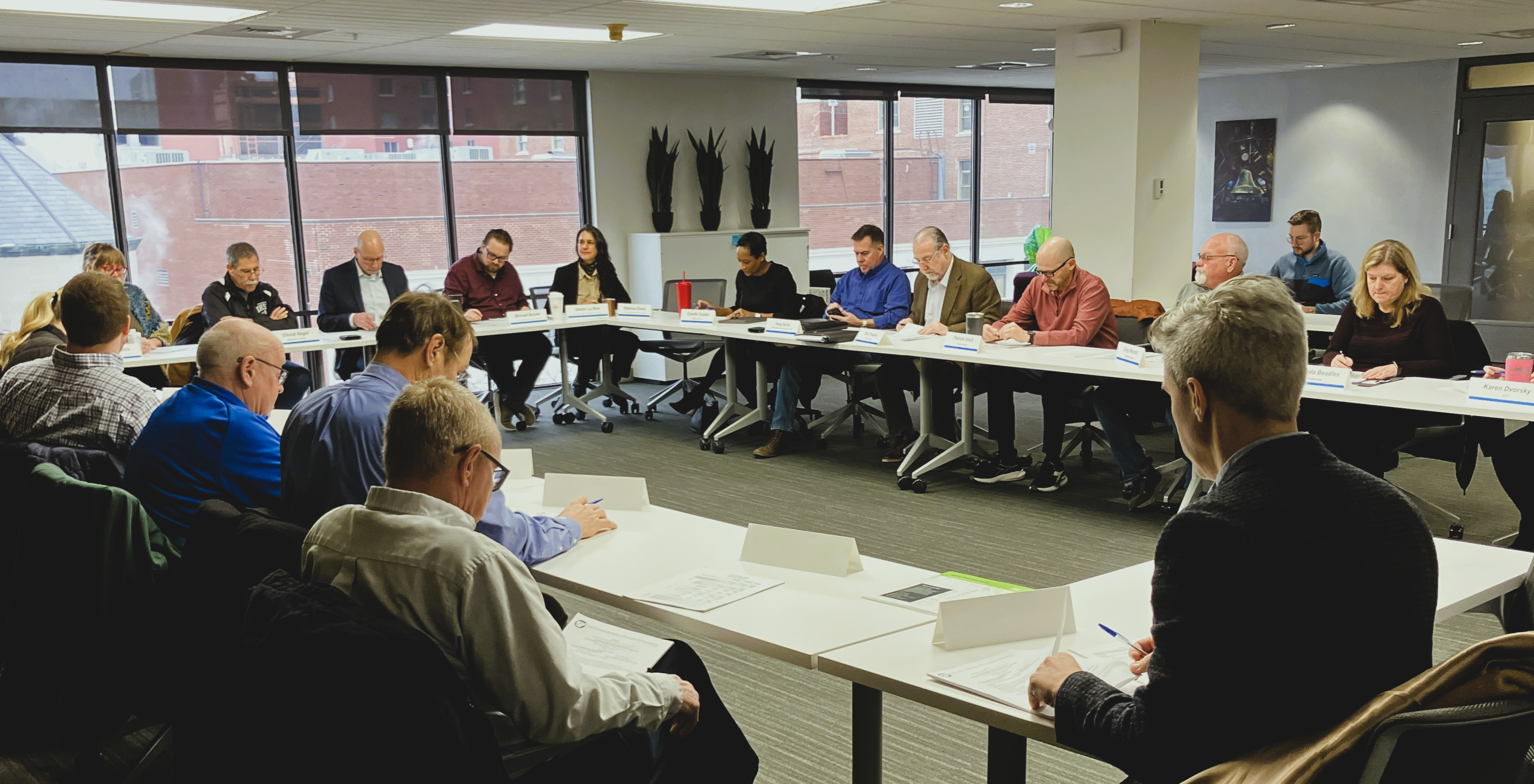
TCRPC established the Peoria-Pekin Urbanized Area Transportation Study (PPUATS) in 1976 to function as the Metropolitan Planning Organization (MPO) for the Peoria-Pekin urbanized area. PPUATS was comprised of two committees: the Policy Committee and the Technical Committee. The Policy Committee was the decision-making body of PPUATS and the Technical Committee serves as an advisory body.
From 1976 to 2021, the PPUATS Policy Committee functioned as the MPO for the Peoria-Pekin Urbanized Area. Effective July 1, 2021, the PPUATS Policy Committee merged with the TCRPC. Following the merger, the Full Commission assumed the MPO’s role, duties, and responsibilities. The Technical Committee continues preparing, reviewing, and recommending actions to the Full Commission for approval.
The merged allowed TCRPC to more effectively represent the region by becoming one united front and removing redundancies between the Full Commission and PPUATS Policy Committee. With the merger, the Full Commission switched from consisting of 22 members, with seven (7) representatives from each county, and one (1) representative from the Illinois Department of Transportation, to 21 members, with 13 representatives from 11 municipalities, two (2) representatives from each county, one (1) representative from the Illinois Department of Transportation, and one (1) representative from the Greater Peoria Mass Transit District.